
Introduction: The Evolution of a Niche Art Form
Indian comic books and graphic novels have officially outgrown the historical stereotype of being mere “children’s entertainment.” Today, the Indian sequential art landscape is undergoing a structural renaissance. A sophisticated wave of independent creators, micro-publishers, and graphic novelists are crafting mature, socio-politically conscious, and visually experimental narratives. From mythological subversions to grit-heavy noir, the modern Indian comic book is a serious literary and artistic discipline.
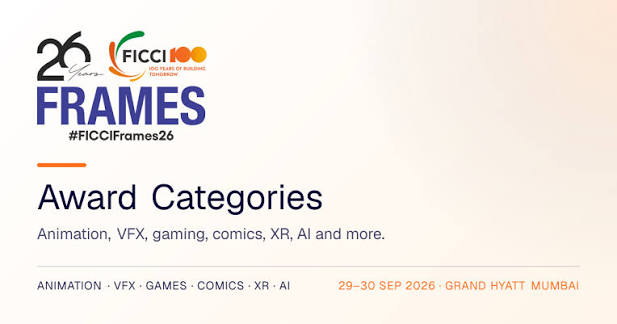
When major institutional entities take notice of this evolution, it is universally viewed as a step forward. The inclusion of dedicated sequential art categories at national-level platforms is a testament to this shift. A prime example is the upcoming FICCI Best Animated Frames (BAF) Awards 2026, scheduled to culminate in a grand ceremony on 29 September 2026 at the Grand Hyatt in Mumbai. For an industry that has long survived on raw intent rather than mass commercial scale, being spotlighted by the Federation of Indian Chambers of Commerce and Industry (FICCI) is a massive victory.
However, institutional validation comes with infrastructural responsibility. As highlighted in a sharp critique published by the vernacular comic-journalism portal ComicsLeLo, a foundational issue threatens the credibility of these awards. While the inclusion of specialized categories like Best Comics/Graphic Novel, Best Comics Writer, Best Comics Artist, Best Comics Colorist, and Best Cover is commendable, it exposes an underlying flaw: The apparent lack of domain-specific comic book experts on the central judging panel.
This missing element raises critical questions about transparency, metric evaluation, and the widening systemic gap between mainstream media conglomerates and independent sub-cultures.
The Anatomy of Sequential Art vs. The Screen Lens
To understand why the comic book community is raising its voice, one must look at the artistic architecture of a comic book. Comics are not merely static movies, nor are they simply illustrated short stories. They exist as an autonomous medium governed by strict, highly specific technical rules—a medium famously categorized by theorist Will Eisner as Sequential Art.
According to publicly accessible structural outlines from the FICCI BAF Awards, the central evaluation panel comprises seven core members tasked with reviewing submissions across multiple expansive domains: Animation, VFX, Video Games, Extended Reality (XR), Artificial Intelligence (AI), and Comics.
While a veteran animation director, a blockbuster VFX supervisor, or a veteran video game developer possesses undeniable mastery over visual storytelling, character design, and structural pacing, their professional training is fundamentally optimized for the screen, not the page.
When a multi-disciplinary jury reviews a graphic novel, they inadvertently tend to evaluate it through a cinematic lens. This creates a severe evaluating misalignment. Comic books operate on silent, static mechanics that have no direct translation in film or animation:
- Panel Layout & Geometry: In film, the screen aspect ratio is uniform. In comics, the layout of the panels is dynamic. The shape, size, and positioning of a panel dictate the passing of time, emotional weight, and psychological tension. A panel is an artistic choice in itself, not just a window.
- The Gutter and Pacing: The white space between panels—known as the “gutter”—is where the true magic of comic book reading happens. The reader’s mind actively bridges the gap between two static images to create closure. Measuring visual pacing across static pages requires an entirely different metric than evaluating the frames-per-second timing of an animation reel. [2]
- Lettering and Graphic Integration: Typography in comics is not a post-production afterthought. The placement of dialogue balloons, the choice of fonts, and the design of hand-drawn sound effects directly control how a reader’s eye moves across a page.
- Color Scripting for Print: A comic colorist works with entirely different color profiles, print bleeding standards, and paper textures compared to a digital colorist rendering VFX passes for an IMAX screen or light-mapping assets for an Unreal Engine game engine.
Evaluating a comic book writer’s script based on traditional screenplay structures ignores the realities of writing for sequential panels. Without an expert who understands how a script transforms into sequential art, an award panel risks celebrating books that “look like movies” rather than books that excel at being comics.
The Risk of Institutional Superficiality
When mainstream bodies include alternative mediums within their existing frameworks without integrating actual members of those sub-cultures, it creates an ongoing state of institutional isolation.
The FICCI BAF Awards have historically built their legacy on the shoulders of the Indian AVGC (Animation, Visual Effects, Gaming, and Comics) sector. However, within the AVGC umbrella, the letter ‘C’ (Comics) has frequently played the role of an overlooked sibling. Animation and VFX pull in corporate investments and massive studio pipelines; gaming commands aggressive venture capital and user-monetization matrices. Comics, by contrast, remain heavily reliant on grassroots creators, boutique indie publishers, and self-funded passion projects.
By leaving the final verdict of specialized comic categories entirely to a centralized general jury panel, the system defaults to a baseline of superficiality. An animation-heavy jury might inadvertently judge an entry based purely on high-fidelity illustration work, missing flaws in panel transitions or sequential legibility. Conversely, an indie book with minimalist, highly stylized indie artwork that uses master-level panel transitions might be completely dismissed because it lacks the glossy, commercial aesthetic that visual effects experts are trained to look for. [2]
This structurally disadvantages the independent comic community. Independent creators do not have access to large studio budgets or massive production pipelines. Their strength lies in pushing the boundaries of the printed medium. If the people evaluating their work do not possess the historical or technical literacy of the comic book industry, the awards risk losing relevance among the very creators they aim to honor.
A Matter of Structural Transparency
As ComicsLeLo’s editorial highlights, this critique is not an attack on the individual capabilities or professional stature of the current jurors. The seven-member panel undoubtedly features pioneers who have shaped India’s digital entertainment frontiers. Rather, it is an argument regarding the lack of structural transparency and specialization in national award systems. [2]
For any institutional award to command absolute authority, the judging process must be transparent. The comic book community deserves clarity on two crucial operational parameters:
- Category Allocation: Did all seven multi-disciplinary jury members evaluate every single submission across all 39 sub-categories, or was there a specialized division of labor?
- Evaluation Metrics: What specific guidelines were provided to evaluate the comic book submissions? Were there distinct scoring sheets for lettering, cover design, and panel sequencing, or were they grouped under generic headers like “Best Visual Design” or “Best Narrative Structure”?
If a national sports award panel tasked with judging wrestling, cricket, and chess consisted entirely of legendary cricket commentators and stadium curators, the chess community would naturally express concern—not because they doubt the achievements of the cricketers, but because the technicalities of chess require a chess master’s eye. The same operational logic applies to sequential art.
The Path Forward: Decentralization and Co-Opting Industry Voices
If platforms like FICCI BAF wish to cement their positions as definitive arbiters of excellence in the Indian comic space, they must evolve from a centralized judging model to a decentralized, specialized framework. The solutions are straightforward and have been successfully executed by historic global entities like the Eisner Awards, the Harvey Awards, and the Angoulême International Comics Festival.
1. Form a Sub-Jury for Sequential Art
The most immediate fix is the creation of a specialized sub-committee or sub-jury dedicated entirely to the comic book categories. This panel should consist of veteran Indian comic book writers, independent publishers, legendary illustrators, sequential art academics, and recognized comic book journalists. The main jury can still oversee the final proceedings, but the shortlisting and technical evaluation should be driven entirely by domain experts.
2. Collaborate with Grassroots Industry Bodies
Organizations like the Indian Comics Association (ICA) or curation teams behind indie platforms like the Indie Comix Fest should be consulted to recommend qualified jurors. Bridging the gap between corporate trade associations like FICCI and grassroots comic unions ensures that the judging panel reflects the actual realities of the ground-level ecosystem.
3. Publish Judging Standards and Points Breakdowns
To build long-term trust, award bodies should publicly release their evaluation scorecards. Knowing that an entry will be judged specifically on panel flow, narrative pacing, graphic lettering integration, and color execution will encourage creators to elevate their technical standards, raising the benchmark for the entire domestic industry.
Conclusion: Respecting the Canvas
The inclusion of comic books at the FICCI BAF Awards 2026 is an encouraging milestone that proves the medium can no longer be ignored by mainstream media decision-makers. It is an acknowledgment that sequential art is a pillar of India’s creative economy.
However, true validation requires deep, unconditional respect for the unique technicalities of the medium. You cannot celebrate the evolution of Indian comics while utilizing an evaluation system that treats them as a secondary branch of animation pre-production. For these awards to achieve genuine cultural equity, the judging panel must change. It is time to diversify the room, open up the parameters, and bring actual comic book specialists to the jury table. Only then will national recognition truly match the artistic intent and hard work of India’s independent creators.