
Why Independent Comics Continue to Matter in a Crowded Publishing Market

Why Independent Comics Continue to Matter in a Crowded Publishing Market

The comics industry has never been short of big publishers, established characters, major franchises and highly recognizable brands. From superhero universes to manga-inspired properties and long-running newspaper strips, readers today have more comics available to them than ever before. Yet alongside this increasingly crowded mainstream market, independent comics continue to find audiences and create opportunities for creators who may not fit within traditional publishing structures.

Independent comics occupy a different space within the larger comics ecosystem. They are often created with smaller budgets, fewer people and limited distribution compared with books released by major publishers. But that lack of scale can also give independent creators something extremely valuable: creative freedom. Without having to build every project around an established character or a commercially proven formula, creators can experiment with unfamiliar genres, personal stories, unusual art styles and subjects that larger publishers may consider difficult to market.

This freedom is one of the reasons the independent comics scene continues to matter. A creator can develop an original character, publish a short comic, test it directly with readers and gradually build an audience around it. The process does not necessarily require waiting for a large publishing company to approve the concept. In an environment where digital publishing, crowdfunding, conventions and direct sales have become increasingly important, the distance between creator and reader has become smaller.

A Different Route Into Comics Publishing

For many creators, independent publishing is not simply an alternative to mainstream comics; it is the first practical route into the industry. New writers and artists often face the same problem: publishers want creators with experience, while creators need opportunities to gain that experience. Independent comics can provide a space where they can develop their storytelling, visual language and publishing skills through actual projects.

This is particularly relevant in markets where the comics ecosystem is still developing. A creator working outside the established publishing system may have to handle several responsibilities at once, including writing, artwork, editing, lettering, printing, promotion and distribution. Although this can be challenging, it also gives creators a much clearer understanding of how comics function as a complete publishing product.

The result is a diverse range of work that might otherwise never reach readers. Some independent comics are highly experimental, while others deliberately follow familiar genres such as horror, science fiction, crime, fantasy or superheroes. What connects them is not necessarily their style, but the fact that the creators have greater control over what they want to make and how they want to present it.

Small Publishers Can Take Bigger Creative Risks

Independent publishers also play an important role in this ecosystem. A smaller publisher may not have the financial resources of a major comics company, but it can sometimes take chances on projects that would be difficult to justify within a larger commercial structure.

For readers, this can make the independent comics market particularly interesting. A mainstream publisher might need a project to appeal to a very large audience before investing heavily in it. A small publisher, meanwhile, may be able to build a business around a much narrower audience. A comic aimed at horror enthusiasts, experimental-comics readers or fans of a particular artistic style can survive without becoming a mass-market phenomenon.

That does not mean independent publishing is easy. Printing costs, distribution, marketing and discoverability remain major challenges. In many cases, creators have to do much of the promotional work themselves, while smaller publishers have limited budgets for advertising and retail expansion. The existence of creative freedom therefore comes with a different set of responsibilities and risks.

Conventions Have Become Important Discovery Spaces

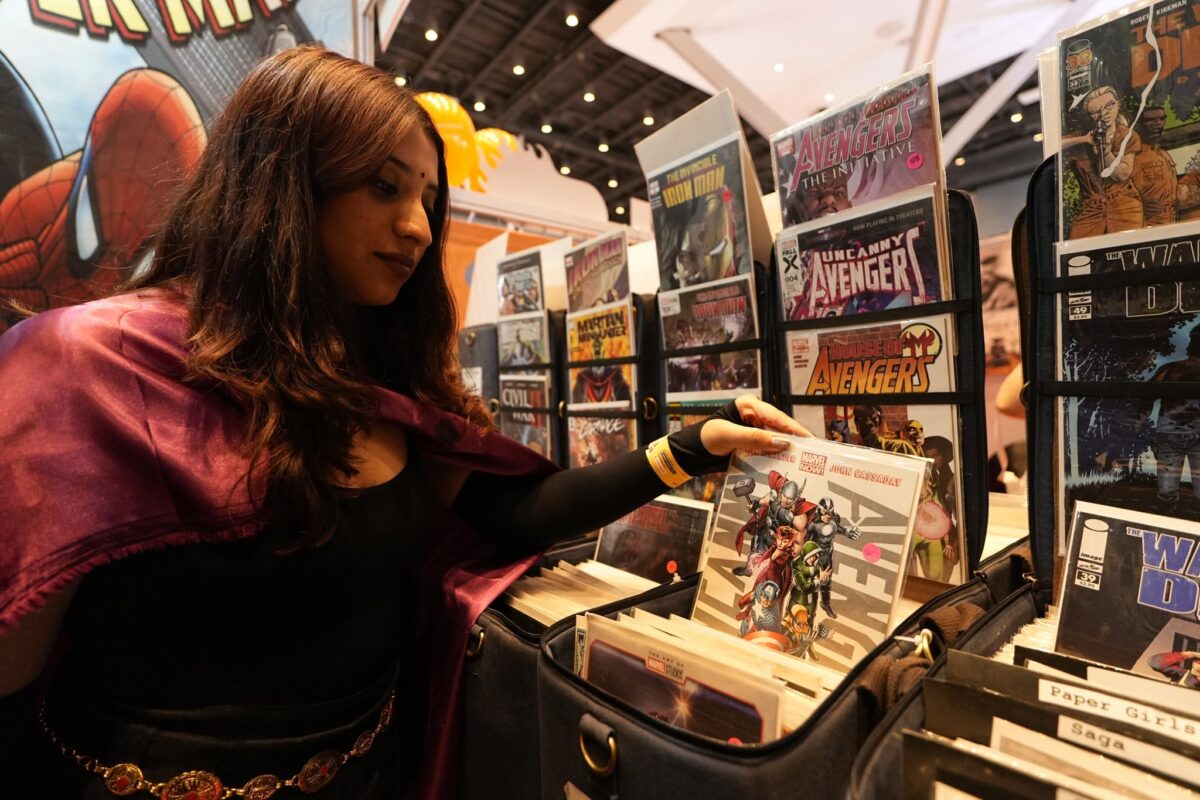
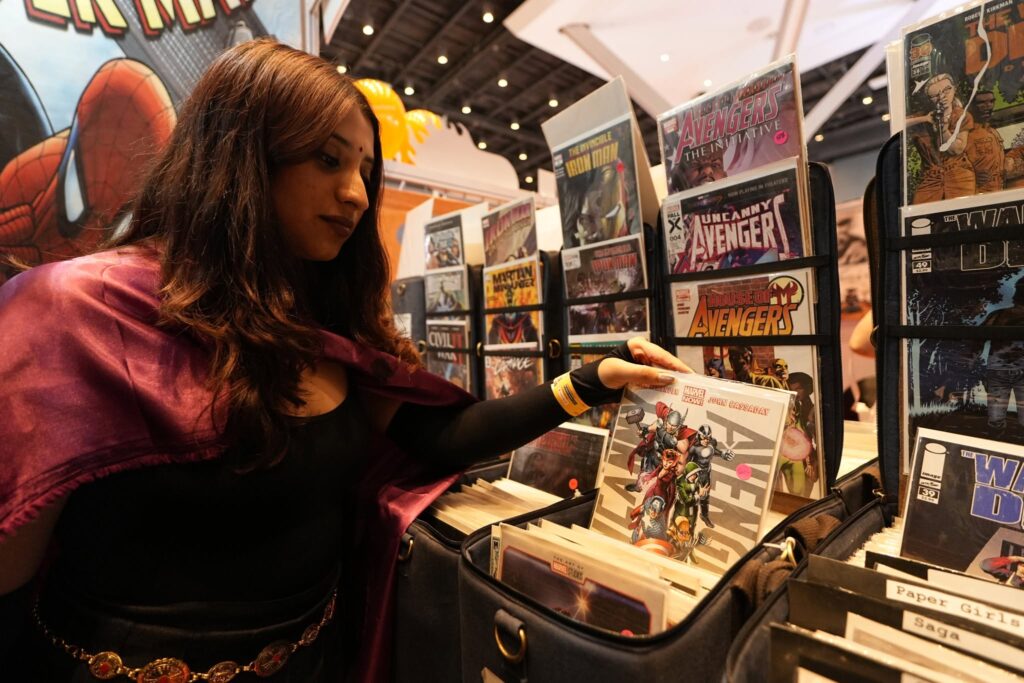
Comic conventions and independent-comics events have also become important parts of this ecosystem. For smaller creators, conventions can provide something that traditional retail distribution often cannot: direct access to readers.

A creator can display a self-published comic, talk to potential readers, collect feedback and sell copies without going through several layers of distribution. These events can also create connections between creators, publishers, artists and readers. For someone who is still building a career, meeting another creator or publisher at an event can sometimes be as valuable as selling copies.

This direct relationship changes the way comics can be discovered. Instead of finding a book only because it has a prominent position in a bookstore or because a major publisher has invested heavily in marketing it, readers can discover comics through conversations, creator tables, recommendations and online communities.

For the independent creator, that relationship can become the foundation of a long-term audience.

The Internet Has Changed the Equation

The growth of digital platforms has further reduced some of the traditional barriers to publishing. Social media can allow creators to show artwork, announce projects and communicate directly with readers. Webcomics can introduce characters and stories before a physical edition is produced, while crowdfunding platforms can help creators test whether an audience is willing to financially support a project.

Digital tools have also lowered the technical barrier to production. Lettering, page layout, editing and promotional design can be handled with software that was not easily available to independent creators in previous decades. Printing itself has also become more flexible, with smaller print runs making it possible to produce physical comics without necessarily committing to a huge initial quantity.

However, easier publishing does not automatically mean easier discovery. The same internet that gives creators access to global audiences also puts thousands of competing projects in front of those audiences. Independent creators therefore face a new problem: not simply producing a comic, but making sure readers can find it.

Original Ideas Still Need Visibility

One of the biggest challenges for independent comics is discoverability. A good comic can exist without receiving meaningful attention if it is buried beneath hundreds of other releases.

This is where comics journalism, reviews, creator interviews, conventions and specialist communities can make a difference. Independent work benefits from having spaces where readers can discover something beyond the biggest publishers and most heavily promoted franchises.

For comics websites and publications, covering independent creators is therefore more than simply filling a news category. It can become part of the industry’s documentation. A creator interview, review or profile can create a permanent record of a project that might otherwise disappear from public attention after its initial release.

The same applies to independent publishers. Their catalogues may contain important experiments, new characters and emerging talent, but those projects can remain invisible unless someone actively documents and discusses them.

India Has Its Own Opportunity

India’s comics ecosystem makes this discussion particularly relevant. The country has a long history of comics publishing, but the contemporary market includes a much wider range of creators and publishers than the names most commonly associated with Indian comics history.

Independent creators are working across genres, languages and formats, while smaller publishers and collectives are experimenting with new ways of producing and distributing comics. Social media and online communities have made it easier for these creators to find readers, but the market is still fragmented.

That fragmentation creates both a challenge and an opportunity. There is no single platform through which every Indian comics project is discovered. Readers may encounter a creator on Instagram, a publisher at a convention, a comic through an online store or a new release through word of mouth. Without consistent documentation, many of these projects can become difficult to find later.

A stronger ecosystem of comics journalism, reviews, interviews, databases and creator profiles can help connect these separate parts of the industry.

Independent Does Not Automatically Mean Better

It is also important not to romanticize independent comics. Being independent does not automatically make a comic more creative, more original or better than a commercially published book. Independent creators can produce excellent work, but they can also produce work that suffers from weak editing, inconsistent artwork, production problems or limited storytelling experience.

The value of independent comics lies more in the opportunities they create than in an assumption that every independent project is superior. They expand the range of voices and ideas available to readers. Some projects will succeed commercially, some will remain niche, and others may simply serve as important learning experiences for their creators.

That variety is healthy for the medium because experimentation often happens at the edges before it becomes part of the mainstream.

The Future May Be More Connected Than Divided

The relationship between independent and mainstream comics is not necessarily a competition in which one side must replace the other. In reality, creators frequently move between different parts of the industry. An artist may begin with self-published work, collaborate with a small publisher and eventually work on a major licensed property. Another creator may spend years in mainstream comics before returning to creator-owned projects.

These movements show that the comics industry is not made up of completely separate worlds. Ideas, creators and audiences move between them.

Independent comics therefore remain important because they provide space for experimentation, new talent and original intellectual property. They also give readers opportunities to discover stories that would be unlikely to appear through the most commercially predictable publishing routes.

In a crowded comics market, that diversity matters. The future of comics will not be shaped only by the largest publishers or the biggest characters. It will also be shaped by creators working with limited resources, small publishers taking calculated risks and readers willing to look beyond the most visible releases.

For the comics industry to grow, those smaller voices need not replace the mainstream. They simply need enough space to be seen, read, discussed and remembered.
Delhi Comic Con 2026 to Bring Indian Comics Publishers and Creators Together

715019985 1458836789618121 8174097655606795659 n

Delhi Comic Con 2026 is scheduled for December 5 and 6 at the NSIC Exhibition Grounds in Okhla, Delhi, with Indian comics publishers, creators and visual storytellers included among the event’s announced participants.

According to the official Comic Con India website, the Delhi edition will feature Indian names including Bullseye Press, Holy Cow Entertainment, Yali Dream Creations, Urban Tales, Studio Kapi and artist Saumin S. Patel.

The event will also include the wider pop-culture programming associated with Comic Con India, including cosplay, gaming, merchandise, celebrity appearances and interactive experiences.

For the Indian comics industry, however, the publisher and creator presence is one of the more interesting parts of the upcoming event.

Indian Comics at a Large Pop-Culture Event

Comic Con India has developed into a large multi-format pop-culture event rather than a convention focused exclusively on comic books.

That means comics now share the same physical space with films, television, gaming, cosplay, merchandise and other forms of entertainment.

This can create both opportunities and challenges for publishers.

The opportunity is obvious: comics creators can reach an audience that may not regularly visit specialist comic shops or follow comics websites.

The challenge is equally clear.

A comic book is competing for attention with dozens of other forms of entertainment.

For smaller publishers, therefore, simply having a presence at a large convention can be valuable.

Bullseye Press

Bullseye Press is listed among the Indian guests for Delhi Comic Con 2026. Comic Con India describes the publisher as an Indian comic publisher known for bilingual storytelling.

The inclusion of a publisher working across languages is particularly relevant in the Indian market.

India does not have one uniform comics audience.

Readers consume comics in English and multiple Indian languages, while different generations have grown up with different publishing traditions.

Bilingual and multilingual publishing can therefore offer publishers another way to reach readers.

Holy Cow Entertainment

Holy Cow Entertainment is another announced Indian comics publisher.

Comic Con India’s official listing describes Holy Cow as a veteran comic-book publisher behind more than 80 titles, including Ravanayan, The Aghori and The Last Asuran.

The publisher’s presence is notable because it represents a long-running part of India’s modern comics publishing landscape.

Events such as Comic Con give publishers the opportunity to put physical books directly in front of readers.

That physical interaction remains important even as digital discovery becomes increasingly common.

Yali Dream Creations and Newer Publishing Voices

Yali Dream Creations is also listed as an Indian graphic-novel publisher, with Comic Con India describing the company as working across genres and focusing on immersive storytelling.

Its inclusion alongside more established publishers demonstrates the variety within India’s current comics ecosystem.

The Indian comics industry is not limited to one publishing model.

There are established publishers, independent creators, graphic-novel studios, small presses and creator-led projects operating simultaneously.

A convention provides a place where readers can encounter these different models in the same environment.

Why Physical Events Still Matter

The rise of social media and online shopping has changed comics discovery.

A reader can now learn about a comic through Instagram, YouTube, X, a publisher’s website or an online marketplace without ever visiting a physical event.

Yet conventions offer something digital platforms cannot completely reproduce: direct interaction.

A creator can talk to a reader about a character.

An artist can show original artwork.

A publisher can explain how a book was produced.

A reader can discover a title simply because it was sitting on a table.

For independent comics, those interactions can be particularly important.

Delhi’s Role

Delhi is also an important location for the Indian publishing and comics ecosystem.

The capital has a large book-buying audience, universities, cultural institutions, publishing companies and a substantial convention-going community.

Holding Comic Con at the NSIC Exhibition Grounds gives publishers a major physical venue for reaching that audience.

The official event listing currently places Delhi Comic Con on December 5–6, while the Comic Con India ticketing page lists single-day passes from ₹1,199 and other pass options.

More Than a Fan Event

The most interesting question surrounding Delhi Comic Con 2026 is not simply how many people attend.

It is what happens when those attendees encounter Indian comics.

A successful convention appearance can lead to direct sales, new readers, social-media followers, creator collaborations and future opportunities.

For publishers, the event can therefore function as a marketing and distribution channel.

For creators, it can become a networking opportunity.

For readers, it can act as a discovery platform.

And for the broader Indian comics industry, the presence of multiple publishers under one roof provides a visible snapshot of the current ecosystem.

Delhi Comic Con 2026 is still several months away, and Comic Con India says more updates are coming.

As additional guests, exhibitors and programming are announced, the event could provide an increasingly useful picture of where India’s contemporary comics and graphic storytelling scene is heading.

Marvel Expands Its Compact Comics Line With Spider-Man Noir and Spider-Punk

screenshot 2026 09 25 at 10.44.16 pm

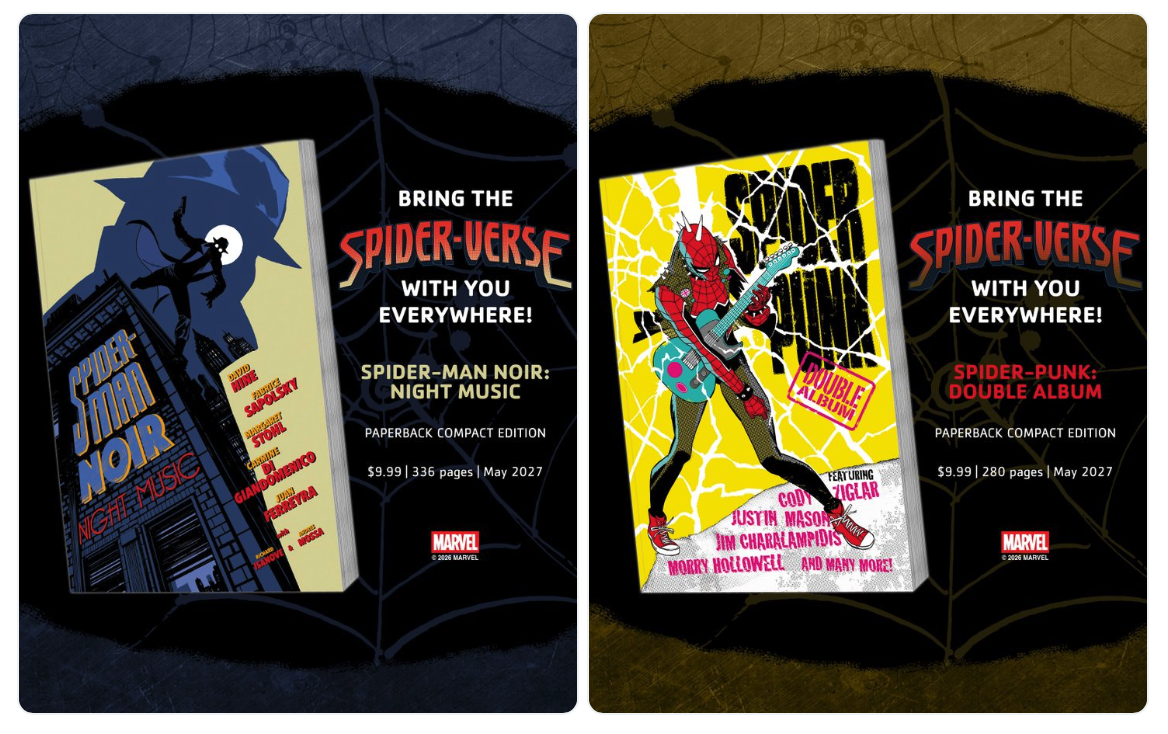
Marvel is expanding its Compact Comics publishing initiative with new volumes centred on Spider-Man Noir and Spider-Punk, adding two alternate versions of Spider-Man to a format designed to make selected stories more accessible to readers.

The new books were reported on September 25, 2026, as Marvel continues to expand its budget-friendly Compact Edition line. The initiative has focused on collecting stories in smaller-format trade paperbacks, giving readers another way to access material from Marvel’s extensive catalogue.

At first glance, another collection of Spider-Man stories may not appear particularly unusual. Marvel publishes a huge number of Spider-Man books every year.

But the Compact Edition strategy is interesting because of what it says about the modern comics market.

The Problem of a Huge Back Catalogue

One of the biggest advantages of a company such as Marvel is also one of its biggest challenges.

There is an enormous amount of material available.

Spider-Man alone has decades of stories, multiple ongoing series, alternate universes, crossover events and different interpretations of the character.

For an existing reader, that history can be exciting.

For a new reader, it can be intimidating.

Where should someone start?

Which stories are important?

Does a reader need to understand years of continuity before opening a particular collection?

Publishers have experimented with different solutions to this problem, including new #1 issues, relaunches, collected editions and simplified entry points.

Compact Editions represent another approach.

Why Spider-Man Noir?

Spider-Man Noir is particularly suited to a collection strategy because the character already exists as a distinct interpretation of Spider-Man.

The Noir version moves the familiar concept into a darker alternate setting. Instead of simply presenting another Peter Parker adventure within the mainstream Marvel universe, the character operates within a different aesthetic and storytelling framework.

That makes the material easier to market as its own experience.

A reader does not necessarily need to begin with decades of mainstream Spider-Man comics.

The same applies to Spider-Punk.

Spider-Punk and the Multiverse Audience

Spider-Punk represents another direction for the Spider-Man concept.

The character became widely recognisable through the larger Spider-Verse phenomenon, which introduced audiences to multiple versions of Spider-Man and demonstrated how flexible the central concept could be.

That flexibility is valuable to Marvel.

Instead of relying entirely on one version of the character, the company can publish stories built around different interpretations, aesthetics and audiences.

The result is a Spider-Man publishing line that can include traditional superhero stories alongside alternative versions of the character.

Compact Editions as an Entry Point

The most interesting part of Marvel’s Compact Edition strategy may be its potential relationship with new readers.

Comics publishers face a recurring problem: the medium has an enormous history, but that history can create barriers to entry.

A new reader does not necessarily want to purchase dozens of individual issues before understanding a story.

Collected editions solve part of that problem.

A compact, relatively inexpensive collection can make the decision easier.

Instead of asking:

“Where do I start with Spider-Man?”

a reader can simply choose a character or story that looks interesting.

That changes the role of the collected edition.

It becomes not just a product for existing fans but potentially an introduction to the medium.

The Importance of Format

Format matters more than it sometimes appears.

Readers have different preferences for individual issues, standard trade paperbacks, hardcovers, digital editions and compact collections.

A publisher that offers several formats can reach different groups without necessarily changing the underlying content.

Marvel’s Compact Editions therefore form part of a broader publishing strategy rather than simply being another collection line.

The question is whether the format can successfully convert curiosity into regular readership.

What It Means for Comics Publishers

The strategy also has implications beyond Marvel.

Indian publishers and independent comics creators face a similar challenge, although at a different scale.

A reader may be interested in a new character but hesitate to spend money on an unfamiliar series.

A clearly packaged first volume, affordable edition or self-contained story can reduce that barrier.

This is particularly relevant for indie comics, where discoverability is often one of the biggest challenges.

The Marvel example shows how publishers can use format and packaging to make a large catalogue easier to navigate.

A Different Way to Think About Marvel’s Catalogue

Marvel’s biggest asset is not simply the number of characters it owns.

It is the number of different stories that can be built around those characters.

Spider-Man Noir and Spider-Punk demonstrate how far the basic Spider-Man concept can travel.

The Compact Comics initiative adds another layer to that strategy by changing how readers encounter those stories.

Whether readers choose Noir, Spider-Punk, mainstream Spider-Man or another Marvel character, the underlying publishing objective remains familiar: make the catalogue easier to discover and give readers a reason to pick up another book.

For a company with one of the largest comic-book libraries in the world, that is an ongoing publishing challenge.

The expansion of the Compact Edition line suggests Marvel is continuing to experiment with how that library can reach readers.

Rebellion Sells Solaris to Profile Books in Major Publishing Move

tramplate d 1

Rebellion has sold Solaris, its science-fiction, fantasy and horror publishing imprint, to Profile Books in a move that brings one of the better-known specialist genre imprints under new ownership.

The deal was reported on September 25, 2026, with Rebellion confirming the sale of Solaris to Profile Books. Rebellion is best known in comics for publishing 2000 AD and Judge Dredd, but the company has also operated a broader publishing business that includes books across science fiction, fantasy and horror.

For readers who primarily know Rebellion through comics, the transaction is nevertheless worth watching because Solaris has developed an identity of its own within genre publishing.

What Is Solaris?

Solaris is a publishing imprint focused primarily on science fiction, fantasy and horror. Its catalogue has included novels and other genre fiction, allowing Rebellion to operate beyond the traditional comics publishing model.

That distinction is important.

Modern comics companies increasingly operate across several forms of storytelling. A publisher may begin with comics, develop relationships with creators and readers, and eventually move into novels, television, film, games or other formats. Rebellion itself is an example of a company whose publishing interests extend beyond the monthly comics traditionally associated with 2000 AD.

Solaris therefore represents a different part of Rebellion’s publishing operation.

The sale does not mean that Rebellion is leaving publishing. Instead, it transfers ownership of one particular imprint to Profile Books.

Why Profile Books?

Profile Books is an independent UK publisher with a broad publishing programme. Bringing Solaris into the Profile Books group gives the imprint a new corporate home while potentially allowing it to continue developing its existing genre identity.

For readers, the most immediate question is what happens to the books and creators already associated with Solaris.

A change in ownership does not necessarily mean an immediate change in the identity of an imprint. Publishing companies frequently acquire established imprints precisely because those imprints already possess a recognisable audience, editorial history and catalogue.

The value is therefore not simply the name on the corporate paperwork.

It is the accumulated relationship between the imprint, its authors, its booksellers and its readers.

What This Means for Rebellion

Rebellion’s decision also provides an interesting look at how specialist publishers manage their catalogues.

Operating several publishing lines requires editorial resources, sales infrastructure, marketing and distribution. A company may decide that a particular imprint can have a stronger future under a different owner while it concentrates on its core areas.

Rebellion remains closely identified with 2000 AD, Judge Dredd and the wider British comics tradition.

That makes the Solaris sale particularly interesting from a comics-industry perspective.

It demonstrates that even companies with strong genre publishing identities may periodically restructure their operations.

The Bigger Publishing Picture

The publishing industry has changed considerably over the past decade.

Genre audiences are no longer neatly separated into comics readers, novel readers, film audiences and game players. A single property can exist across several formats, while readers increasingly discover stories through different media.

That creates opportunities for publishers, but it also makes publishing businesses more complicated.

A specialist imprint needs a clear identity. It must attract creators, reach readers and maintain enough visibility to compete for attention in a crowded marketplace.

Solaris already has that identity.

The new ownership therefore gives Profile Books an established genre imprint rather than requiring it to build one from scratch.

What Happens Next?

The immediate future of Solaris will be worth following through its upcoming publishing announcements, creator relationships and catalogue decisions.

For readers, the most useful indicator will not simply be the ownership change itself. It will be whether Solaris continues to publish the type of science-fiction, fantasy and horror books that established its audience.

For the wider comics and genre publishing industry, the transaction is another example of how specialist publishing businesses evolve.

Rebellion’s connection with 2000 AD and Judge Dredd remains one of the company’s defining characteristics, while Solaris now enters a new chapter under Profile Books.

The deal is therefore less about the disappearance of an imprint and more about a change in who controls its next stage of publishing.

And for an industry built around long-running creative properties, catalogues and specialised audiences, that distinction matters.